
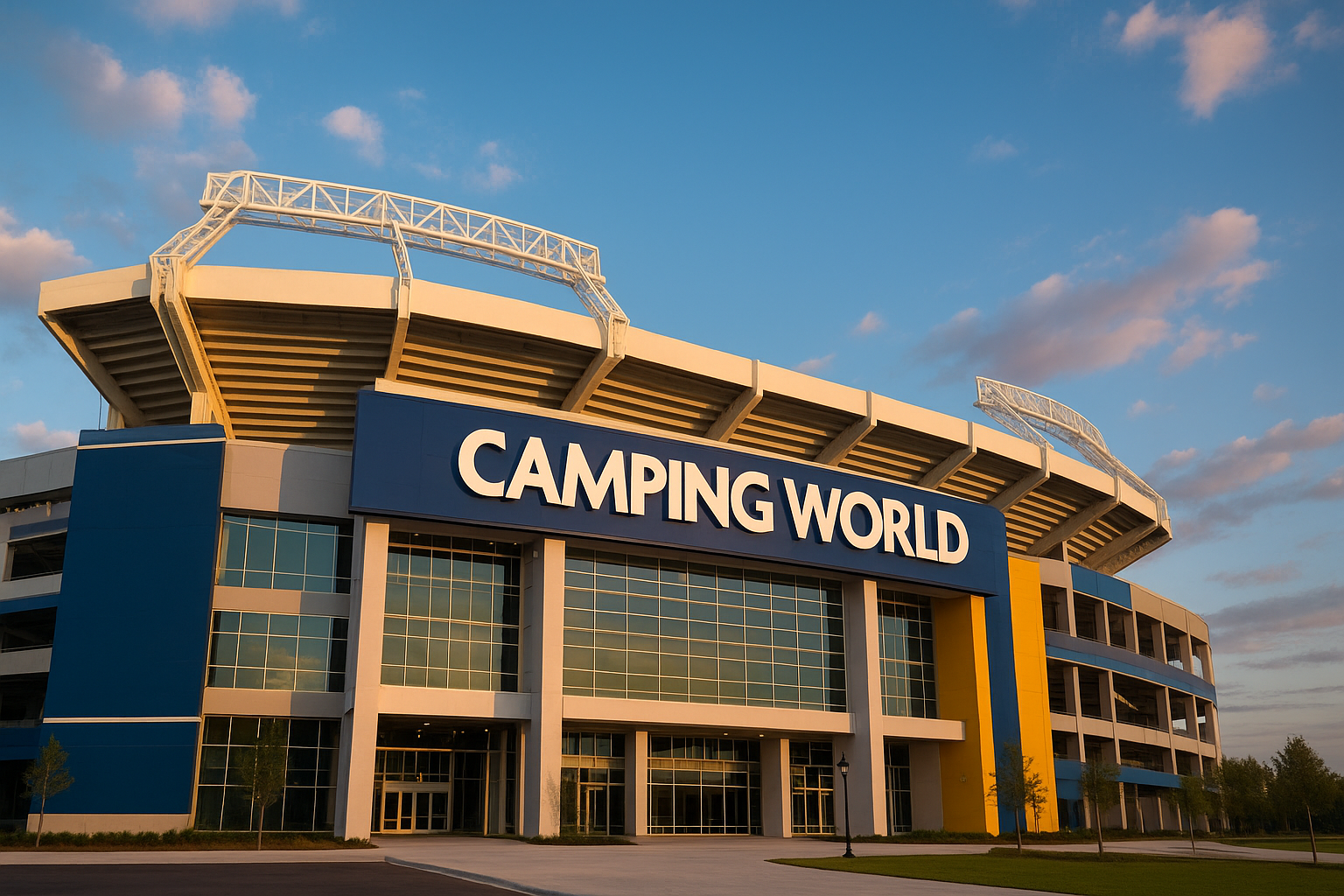
In the heart of Orlando, Florida, stands a venue that has witnessed the tides of history and now embraces a future defined by style and performance. The Camping World Stadium a modest municipal stadium—has transformed itself into a modern, high-impact facility. This evolution reflects more than just concrete and seats; it speaks to ambition, community identity, architectural innovation and experiential design. In this article, we explore how this stadium has entered a bold new era, in which style and performance converge to deliver something far beyond the expected.
From Humble Beginnings to Reinvention
The story of the stadium begins in 1936, when it opened as Orlando Stadium as a Works Progress Administration project. Camping World Stadium+4Wikipedia+4Camping World Stadium+4 With an original seating capacity of just 8,900 and constructed at a cost of US$115,000, its aspirations were modest. Over the decades, the facility has undergone numerous name changes—from Tangerine Bowl, Citrus Bowl, Florida Citrus Bowl, Orlando Citrus Bowl, and finally to its current identity as Camping World Stadium in 2016.
Critical expansions marked its evolution: in the 1950s and 60s, incremental capacity increases; in the mid-1970s a major expansion; in 1989 another large investment; and then a complete rebuild of the lower bowl in 2014 at a cost of roughly US$207 million. It is this latest phase that truly signaled a bold new era—where style (in the form of modern design, amenities, seating comfort) and performance (in terms of crowd experience, event capability, technical infrastructure) became central priorities.
Design Philosophy: Style Meets Functionality
What makes this stadium’s “new era” distinctive is the way style is woven into performance. The renovations brought in wider, chair-back seats, six additional inches of legroom in the lower bowl, and premium club spaces with both enclosed and open-air amenities. These features are not just cosmetic upgrades—they signal a shift in how the venue positions itself in an era where spectators expect more than mere seating.
The concourses were re-imagined as 360-degree thoroughfares, enabling smoother circulation, better sight lines and improved amenities. Meanwhile, digital infrastructure took a leap: multiple giant video boards, enhanced mobile broadband coverage, improved concession/restroom service. The synergy of aesthetics and function means the stadium doesn’t merely host events—it presents them in an elevated manner.
Architecturally, the façade and plaza levels were updated to create an open-air external presence. According to data, approximately 90 % of the stadium was newly constructed or heavily re-worked in the 2014-era renovation. Greater Orlando Sports+1 This commitment to design reflects a broader trend in major venues worldwide, where fan experience and multipurpose activity dominate the strategy.
Performance in Every Dimension: Crowd, Community, and Capability
Performance in the context of Camping World Stadium is multi-dimensional. First, there is the performance of space: the re-designed lower bowl, improved amenities, better sightlines mean the venue performs better from a viewer standpoint. From a technical and operational standpoint, the modern infrastructure allows a broader variety of events—from college football bowl games to international soccer, concerts, even professional wrestling. The stadium has hosted matches of the 1994 FIFA World Cup, the 1996 Olympics (soccer), the NFL’s Pro Bowl, and major entertainment spectacles.
Second, there’s community performance. A venue of this scale has an economic and social dimension; studies show the stadium generates significant economic impact for the region—visitor spending, employment, tax contributions. Tourism Economics+1 The way the stadium is embedded within the broader “campus” of adjacent fields and event spaces further reinforces its community role. Camping World Stadium
Third, event-capability performance: the stadium is ready for major global events, including having been in the running for hosting matches of the 2026 FIFA World Cup. Greater Orlando Sports The combination of scalable seating (around 60,219 for football, expandable to ~65,000) and modern event infrastructure means the stadium is both flexible and high-performance. Manchester City FC+1
Aesthetic and Experiential Innovations
In terms of aesthetic transformation, the stadium’s renovation brought thoughtful touches that emphasize comfort, immersion, and identity. The introduction of chair-back seating and added legroom may seem modest, but in the viewer’s experience, they matter—more comfort equates to more engagement, fewer distractions, and better overall satisfaction. The premium club areas provide both upscale amenities and distinctive vantage points, making part of the stadium feel exclusive while still being connected to the main bowl.
From the experiential side, the improved concourses, digital displays, and broad open-air design create a sense of arrival and occasion. The role of architecture here moves from functional “build it so people sit” to designed “make them arrive, linger, participate”. The stadium is no longer just a container for events—it is part of the event, part of the narrative. The open-air façade suggests transparency and connectivity with the surrounding neighborhood, inviting interaction beyond event hours.
Importantly, the design also reflects sustainability ambitions. In recent phases, the stadium achieved LEED Silver certification for new construction. Greater Orlando Sports+1 Style is not simply dress-up—it is thoughtful about light, energy, environment, and the long-term legacy.
Identity and Branding: Making a Statement
The renaming of the venue to Camping World Stadium in 2016 is more than corporate signage. That move marked a deliberate identity shift—from a regional bowl stadium to a multi-purpose, nationally recognized destination. WESH+1 The brand alignment encapsulates the broader “bold new era”: attention to experience, to versatility, to national-scale relevance.
The stadium’s identity is tied to Orlando’s wider ambition as a sports and events destination. The enhancements to the venue reinforce that identity: the stadium is positioned not just for local wins, but for global showcase events. The messaging is clear: this is a place where style (how things look), performance (how things happen) and destination (why people come) intersect.
Strategic Investment and Growth Direction
The bold new era also requires strategic investment—and the story of Camping World Stadium reflects this. The 2014-era reconstruction cost more than $200 million. More recently, further announcements include a $60 million phase to add club levels, additional seating, premium amenities—all part of a total reconstruction plan of approximately $267 million. Greater Orlando Sports These numbers signal serious commitment.
What this investment buys is not merely more seats—it buys better experiences, broader event capacity, higher revenue streams, and enhanced status. The stadium becomes a performance asset, not just a venue. The economic modeling supports this: the stadium’s presence contributes significantly to regional tourism and economic activity. Tourism Economics
Multifarious Event Scenarios: Flexibility and Versatility
One core aspect of the stadium’s performance is versatility. It doesn’t just host one kind of event—it has accommodated college football bowl games, professional football, soccer world-cup matches, wrestling spectacles, concerts and festivals. This flexibility is central to the “bold new era” concept: no longer a static single-purpose facility but a fluid, multi-use platform.
Architectural and operational design reflect this versatility: from individual seating comfort to club experiences to premium suites; from camping world stadium football field layouts to soccer configurations to concert staging. The adaptability helps the venue remain relevant in a shifting entertainment landscape, where audiences expect more immersive and varied experiences.
Fan Experience: Immersion, Engagement, Comfort
For the visitor, the difference in this new era is palpable. Walking into the stadium today, one is greeted by refined design, improved amenities, camping world stadium technology-enabled engagement, and visual cues of modernity. Chair-back seating and extra legroom may seem simple, yet they denote respect for the spectator. The concourses, surrounds, screens, premium clubs—all contribute to an immersive environment where attending an event is elevated.
The stadium’s campus design—adjacent fields, event spaces, open plazas—allows for more than just game-day seating. Fans can arrive early, camping world stadium linger after, engage with social spaces, food and beverage, entertainment. The boundary between venue and environment is more porous. This is style merged with performance: the venue performs operationally, but does so while conveying aesthetic and experiential style.
Global Relevance: Hosting the World, Hosting Big
In the reckoning of stadiums worldwide, the measure is how well one can host major events. Camping World Stadium ticks the box. It hosted matches in the 1994 FIFA World Cup, soccer matches during the 1996 Olympics, and was part of Orlando’s bid for the 2026 FIFA World Cup. Manchester City FC+1 Its modernization enables it to remain competitive on a global stage, not just regional.
Moreover, in the entertainment sphere, it has held major spectacles such as the WWE’s WrestleMania with record setting attendance. Manchester camping world stadium This breadth enhances the brand of the stadium, and by extension, the city around it. In a world where venue prestige matters, this stadium is asserting itself as a modern contender.
Legacy and the Path Ahead
While the stadium celebrates its new era, the legacy remains important. The original spirit—built during the Great Depression, serving the community, camping world stadium evolving with changing times—is still embedded in its story. Each expansion, each reconstruction phase built on layers of the past, even as the look and capability transformed.
Looking ahead, the stadium is not static. Further renovation plans include tearing down older upper decks and replacing them with new integrated structures, fieldhouses, and broader redevelopments. Camping World Stadium+1 The bold new era is ongoing; the commitment to style and performance remains future-facing.
The Broader Symbolism: Venue as Vision
Ultimately, the story of Camping World Stadium is less about bricks and turf than about vision. It is about how a public venue adapts to changing culture, rising expectations, technological shifts and evolving entertainment paradigms. Style and performance become twin pillars—a stylish venue that performs operationally and experientially.
It signals a belief: that a stadium can elevate beyond functional hosting and become a destination, a piece of architecture, a catalyst for community and commerce. camping world stadium The performance element—whether of concerts, championships or global events—anchors the vision in tangible output. The style element wraps that output in an experience worth remembering.
Conclusion
In an era where sports venues are challenged to keep pace with consumer expectations, the transformation of Camping World Stadium stands out. It is a bold declaration that style and performance are not optional—they are essential. From its origins in 1936 as a modest local field to its current incarnation as an international-caliber arena, it has embraced change, invested deeply and positioned itself for the future.
The seats are more comfortable, the concourses more expansive, the amenities more refined. The events are bigger, the technology more advanced, the audience more demanding. And through it all, the stadium commits to delivering not just a place to watch—but a place to experience
